
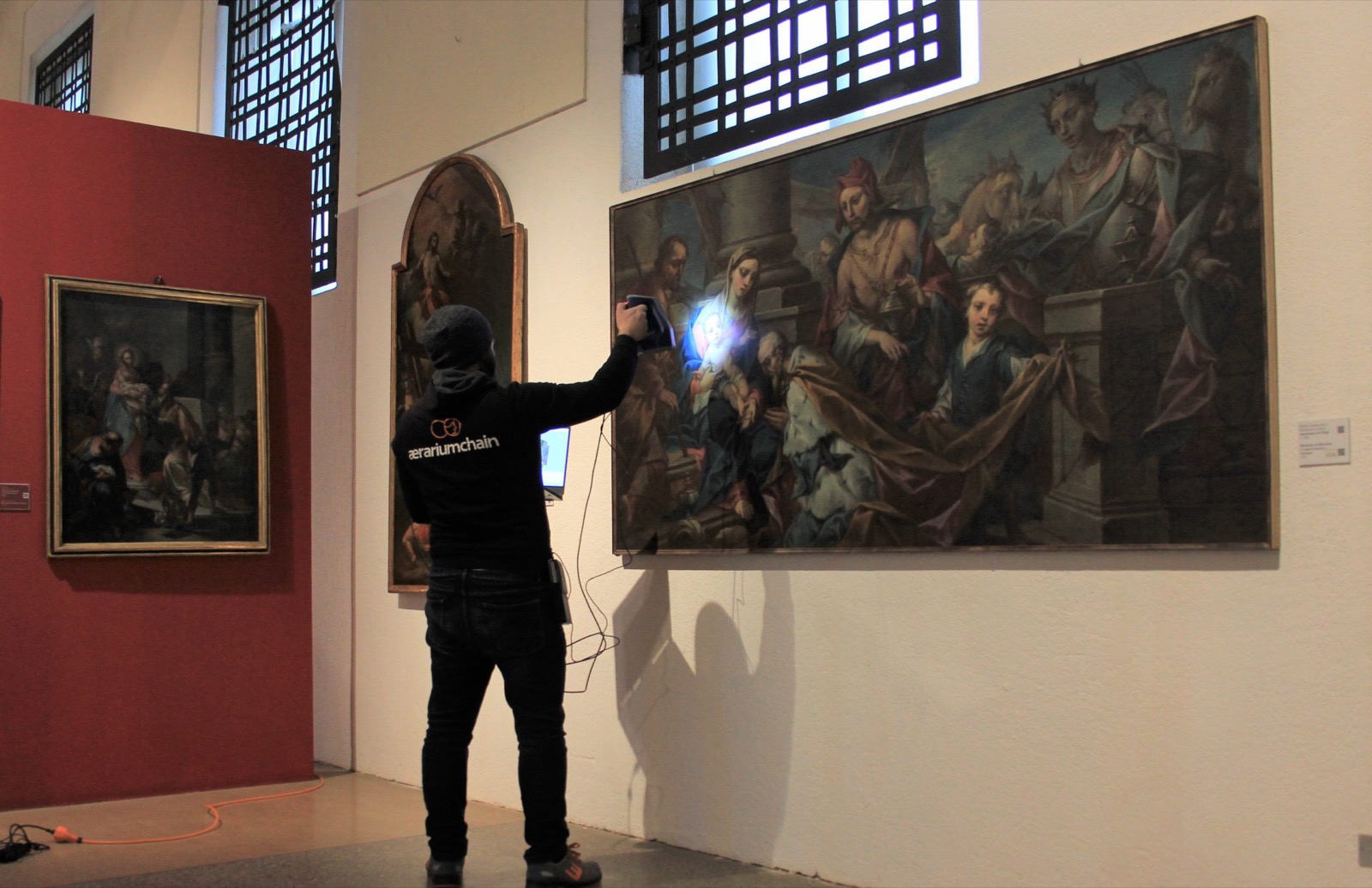
Most collection management systems were built to describe artworks. AerariumChain is built to hold the artwork itself, as a certified digital twin, next to its record. For a collection manager that changes what the job looks like day to day.
The record card was never the artwork
A typical collection database knows a lot about an object: inventory number, dimensions, materials, location, loans, a few photographs taken years apart. What it cannot tell you is what the object looks like today, at the level of detail a conservator or an insurer would ask for. That knowledge lives in people, in paper condition reports and in folders of images that nobody can compare.
When the collection is small, this works. When it runs to thousands of objects, most of which sit in storage, it means the majority of the collection is never really checked. It is listed, not monitored.
What changes with a certified twin
In the AerariumChain HUB every artwork has its record, its versions and its full scan history in one place: master files, capture attempts, quality approvals and the blockchain notarization of each file. The catalog stays a catalog (inventory numbers, formats, dates), but the twin is one click away. What used to be a record card becomes something you can open, measure and reuse.
- The state of the object is data. 3D geometry down to 0.05 mm and 400-megapixel photography mean the condition of an artwork is something you can measure, not only describe.
- History you can compare. Re-scan over time and CARE compares each twin against its own past, so cracks, warping or paint loss show up as measurable differences.
- Proof of integrity. Each file's fingerprint is written to a public blockchain at capture. Months later, anyone you authorize can verify that a file has not been altered.
Digitization at the pace of a collection, not of a project
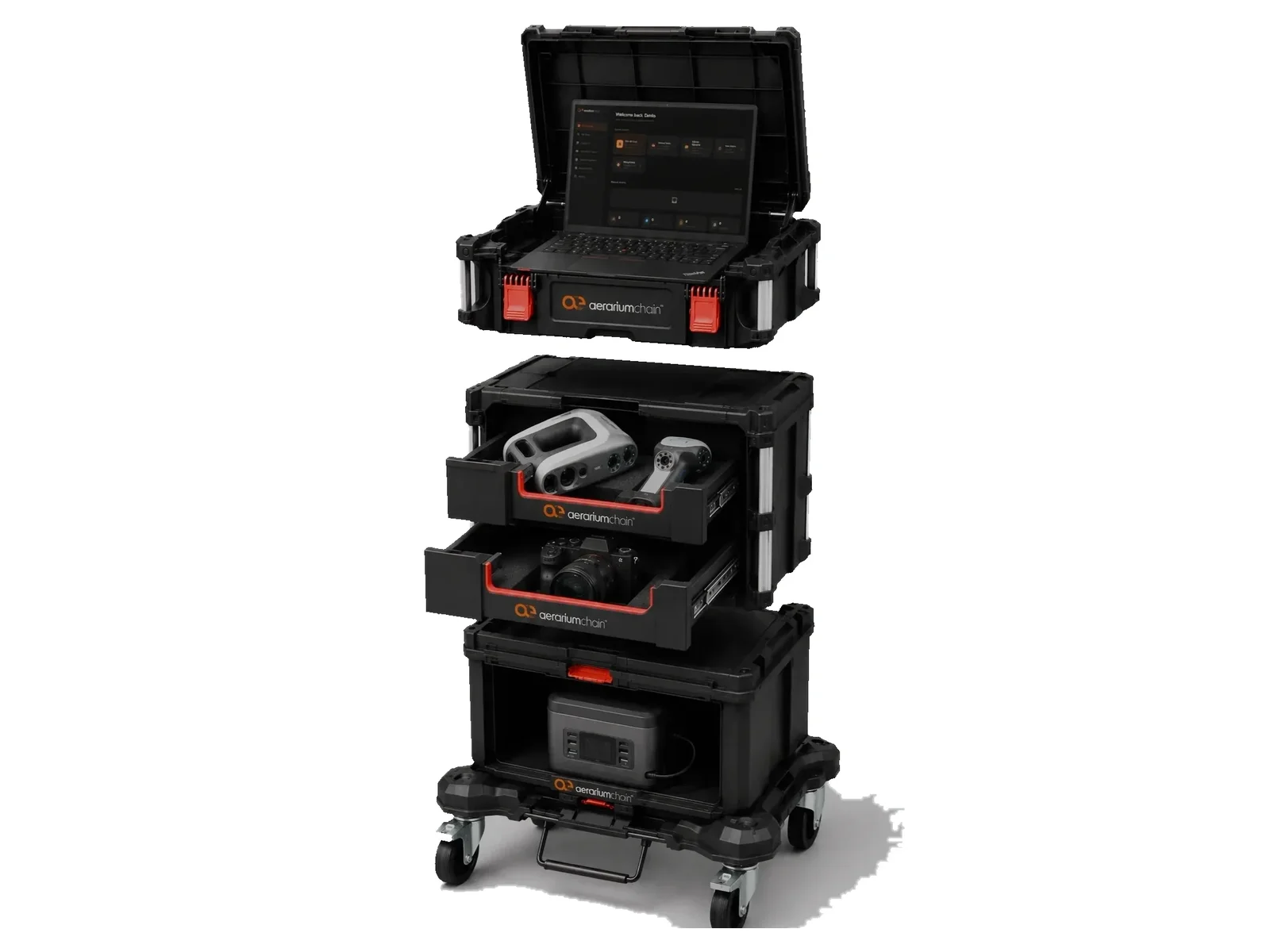
The usual objection is time. Photographing and modeling a large collection used to take years. The AerariumChain kit was designed to make it routine: one operator, around one hundred artworks a day, with data uploaded from the room and processed in the cloud. Raw scans flow into the HUB, get processed and come back for review in the browser, with an OK or NOK and structured comments, version by version. The collection manager approves what enters the registry, exactly as they would approve any other record.
Want to see your own objects as twins in the registry?
Fits the systems you already have
You do not have to replace your collection database to start. The HUB imports data from existing systems, uses open formats and keeps export always available (METS packages, meshes, TIFF pyramids). Connectors to national heritage systems are part of the platform, and integrations are documented. If one day you decide to leave, the twins leave with you, complete and readable.
People, roles and what each of them sees
Collection work is shared work: conservators, curators, registrars, external restorers, photographers, insurers. In the HUB each person gets a role and sees exactly what that role allows. A conservator in Turin and a specialist in New York can inspect the same twin at the same time. Sensitive works can stay visible to a restricted circle only, and nothing becomes public without an explicit decision.
What a collection manager gains in practice
- A registry where every object has a measurable, dated state, not only a description.
- Periodic checks on stored works without moving them to a lab each time.
- Faster answers to lenders, insurers and researchers, because the evidence is already there.
- A single place where scans, approvals and notarizations are tracked, instead of scattered folders.
- Data that belongs to the institution, hosted in its region, private by default (security and data sovereignty).
More than 10,000 artworks in over 70 collections have already been scanned and notarized this way, from national museums to private collections (see where). If you manage a collection and want to see how your own objects would look as twins in the registry, ask for a demo and bring a few inventory numbers with you.