Home · Process
The process
Digitizing a great collection used to take years. We industrialized the process: a kit that travels, a pipeline that never stops, and a certified digital twin about 48 hours after the scan.
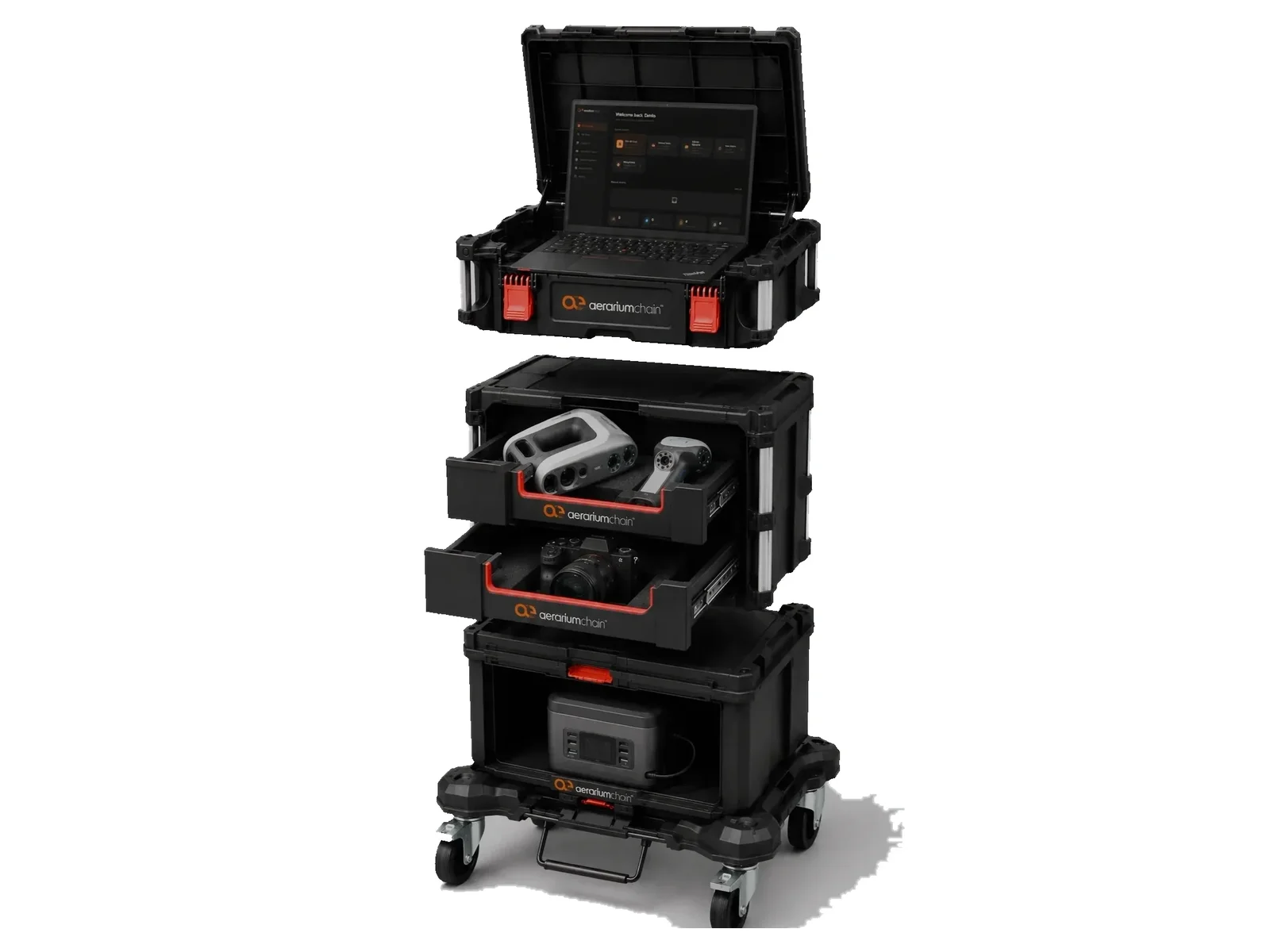
The kit
Structured-light 3D scanning, 400-megapixel photography and multispectral imaging, with on-board computing and connectivity. Each photograph combines 16 pixel-shifted 101-megapixel shots into a 400-megapixel frame, and the frames are stitched into gigapixel images. It travels in an ordinary car, moves safely through the gallery, and uploads while you keep scanning.
Two to five minutes per artwork. Geometry and photographic texture in one pass; multispectral layers where the work calls for it. Paintings, sculptures, textiles, jewels.
The fingerprint of every file is written to a public blockchain as it is captured: a certain timestamp, tamper-proof provenance, evidence you can bring to an insurer.
Data streams up already structured. GPU workers reconstruct meshes, build Gigapixel tiles and generate metadata, with no workstation and no post-processing team on your side.
The museum and the QA team inspect every twin in the streaming 3D viewer, rotate, zoom, mark OK or NOK with structured comments. Approval takes hours, not weeks.
Approved twins land on the HUB and, where required, are packaged and delivered to national heritage systems automatically (see interoperability).
The institution owns every right to its data. Always.
Full-resolution. No software. No download. Open it on your phone.
