
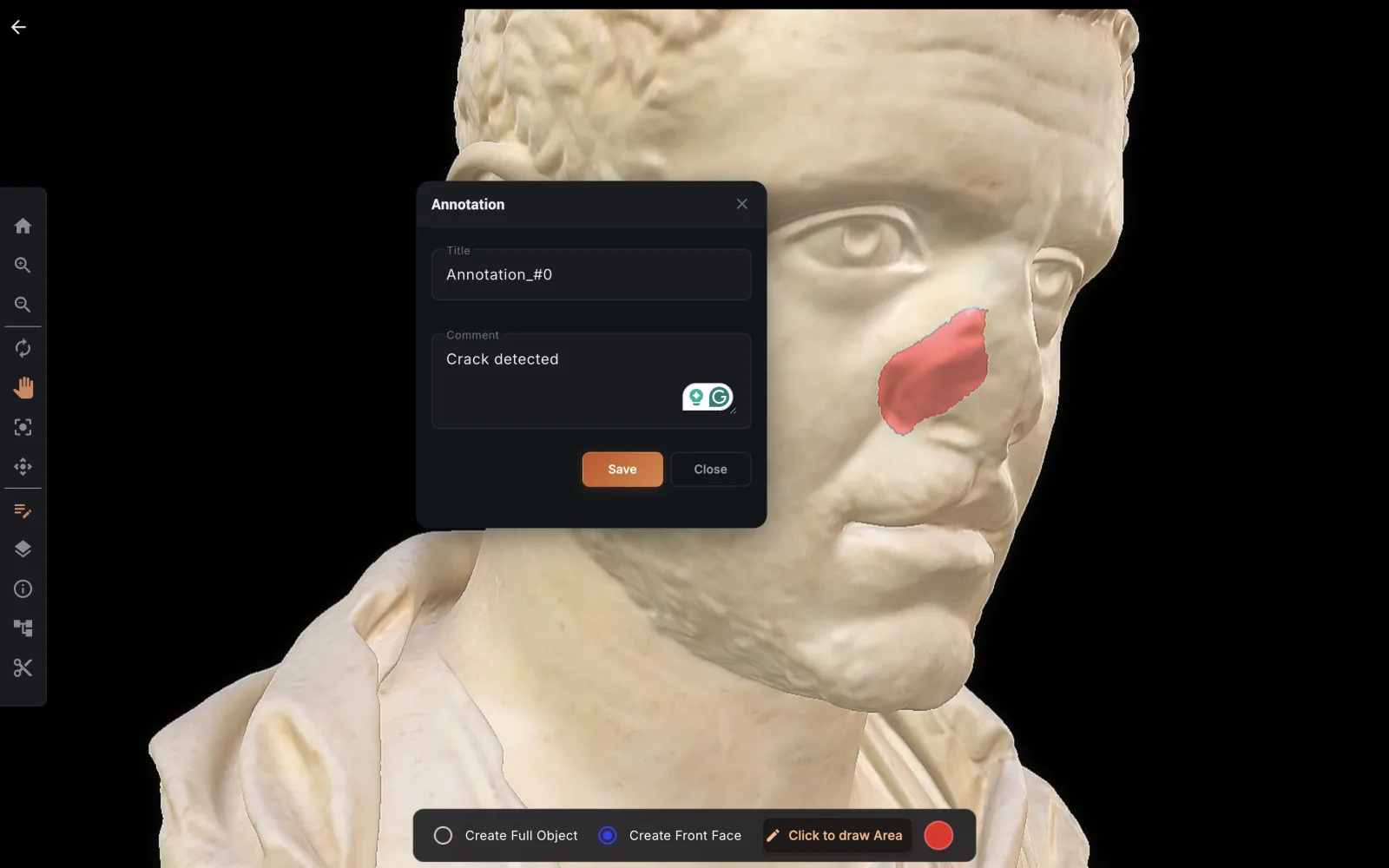
The artwork, checked even when you have many.
Diagnostics, comparison between scans over time, annotations, collaboration between specialists anywhere.
Explore CAREHome · The HUB
The platform
The AerariumChain HUB is where the twins live: the registry of the collection, the scan pipeline with its quality control, a viewer that streams terabytes to any device, and a growing store of applications. Three families of services grow on top: CARE, SHOW and FUND.
Every artwork with its records, versions and full scan history: master files, attempts, approvals, blockchain notarization. Data imports from your existing systems.
Raw scans flow in from the field, get processed in the cloud and reviewed in the browser: OK/NOK with structured comments, version by version.
Full-resolution geometry and texture on a phone, a kiosk or a laptop. Progressive streaming: a multi-gigabyte master travels as a few dozen megabytes.
Applications for the museum install from the HUB store: scanner tools, site manager, totem interfaces, XR experiences. One click, connected to your twins.
Invite conservators, curators, external specialists and partners with granular roles. Everyone sees exactly what they should.
Open formats, export always available, connectors to national heritage systems. How the HUB talks to other systems →
Share a twin with a scholar, embed it in your website or open it to the public: access is a setting, not a project. Who owns and controls the data →
Inside the HUB
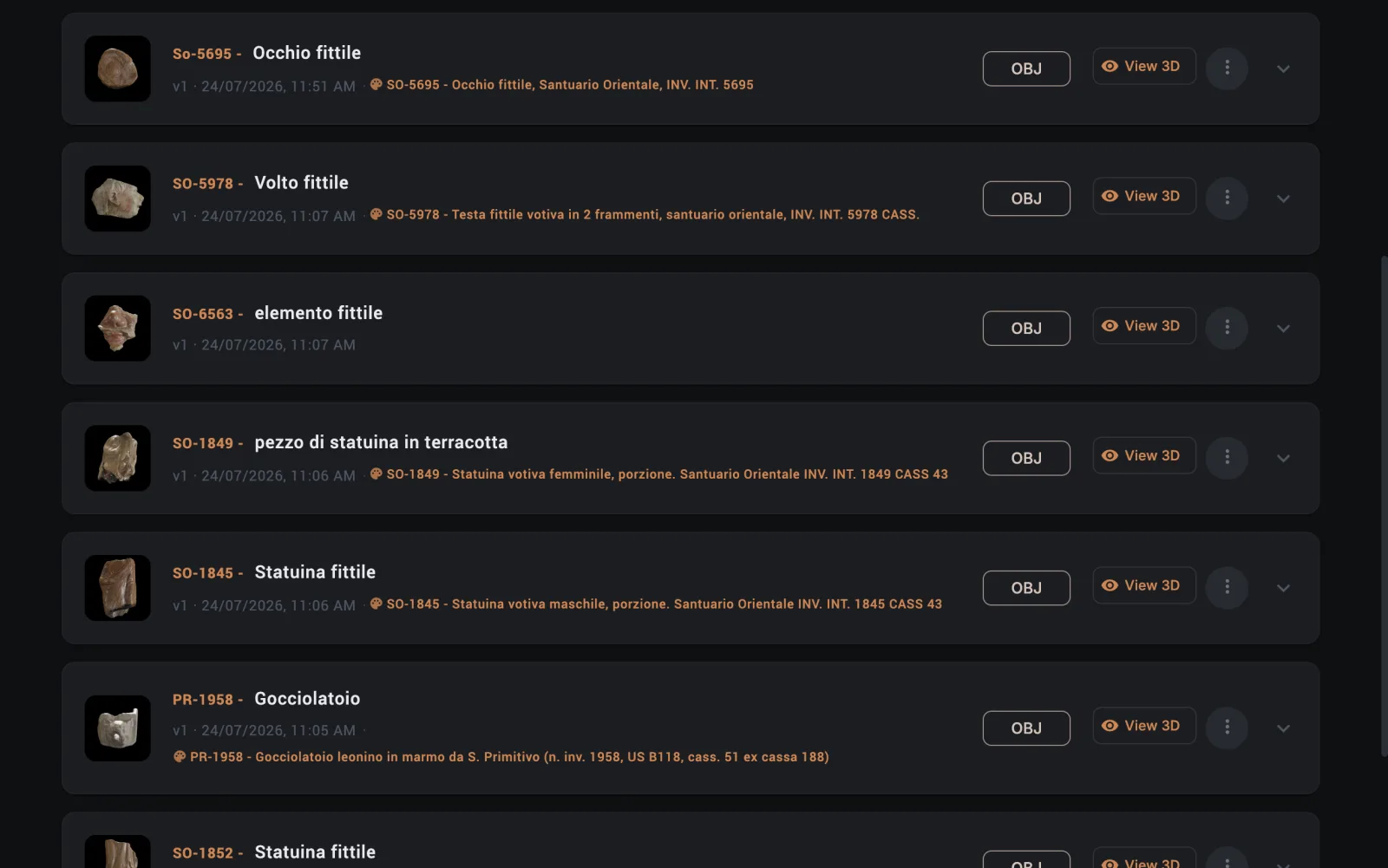
The catalog
The collection lives as a working catalog: inventory numbers, versions, formats and dates for each artwork, with the twin one click away. What used to be a record card becomes something you can open, measure and reuse.
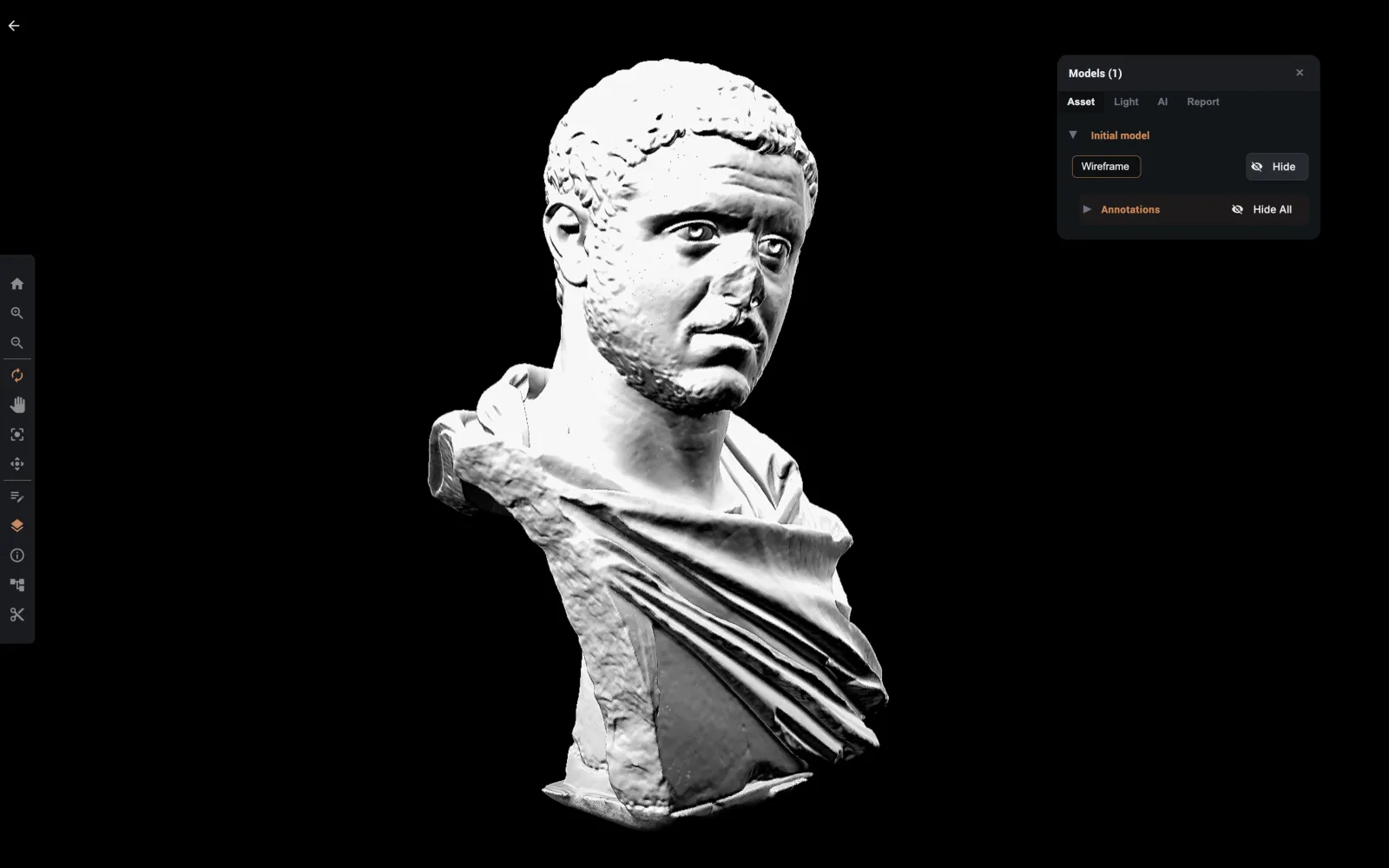
The viewer
Full resolution on any device: model layers, wireframe, annotations, light and material controls. A 5 GB master travels roughly like your favorite streaming movie, on an ordinary phone.
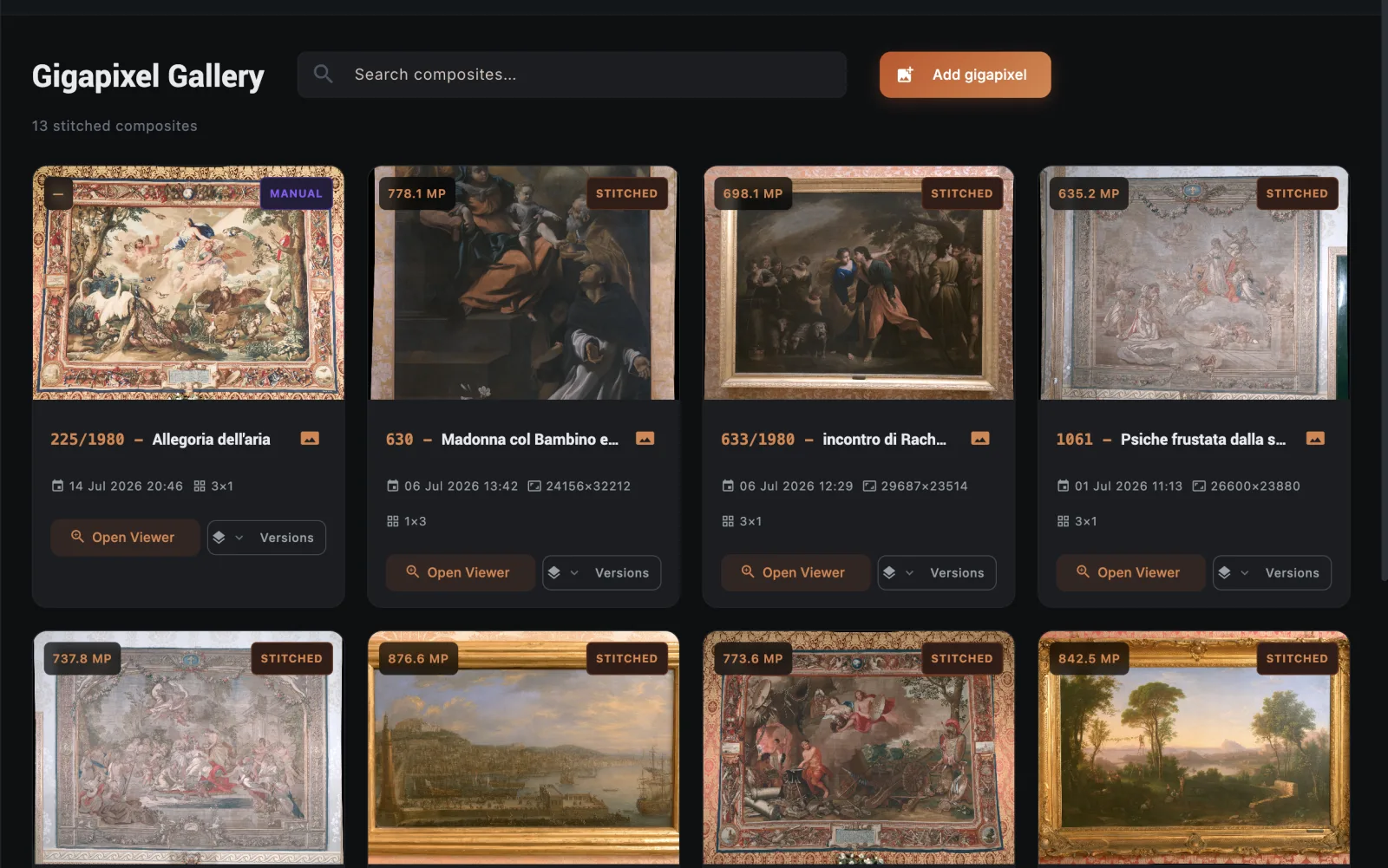
Gigapixel
Stitched captures of paintings and tapestries sit next to the 3D: each composite opens in a deep-zoom viewer that goes down to the single thread or brushstroke.
Publishing
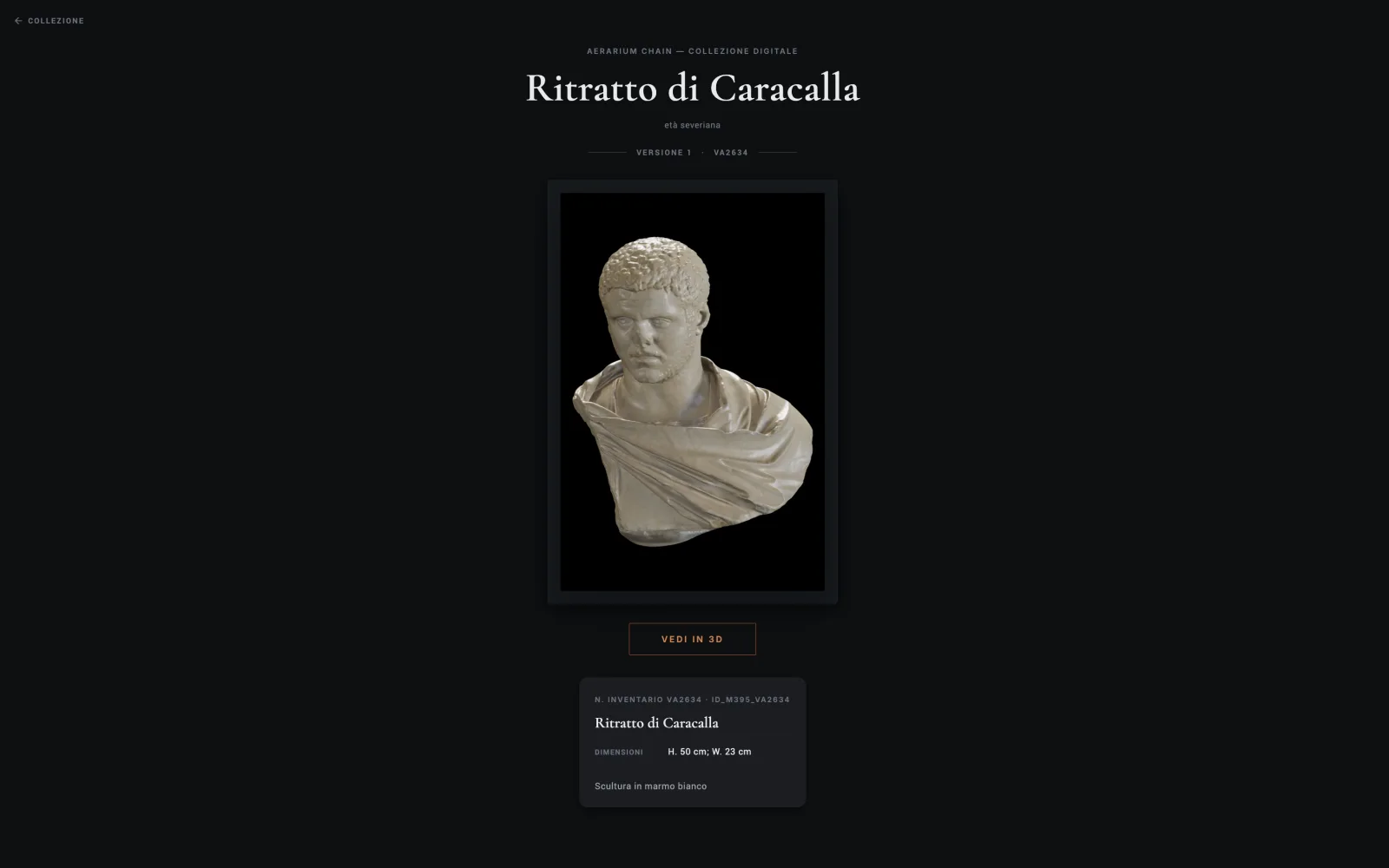
Curated pages go straight from the HUB to visitors: artwork sheet, dimensions, inventory data and the twin itself, viewable in 3D by anyone you choose.
Three ways to use a twin
Diagnostics, comparison between scans over time, annotations, collaboration between specialists anywhere.
Explore CARE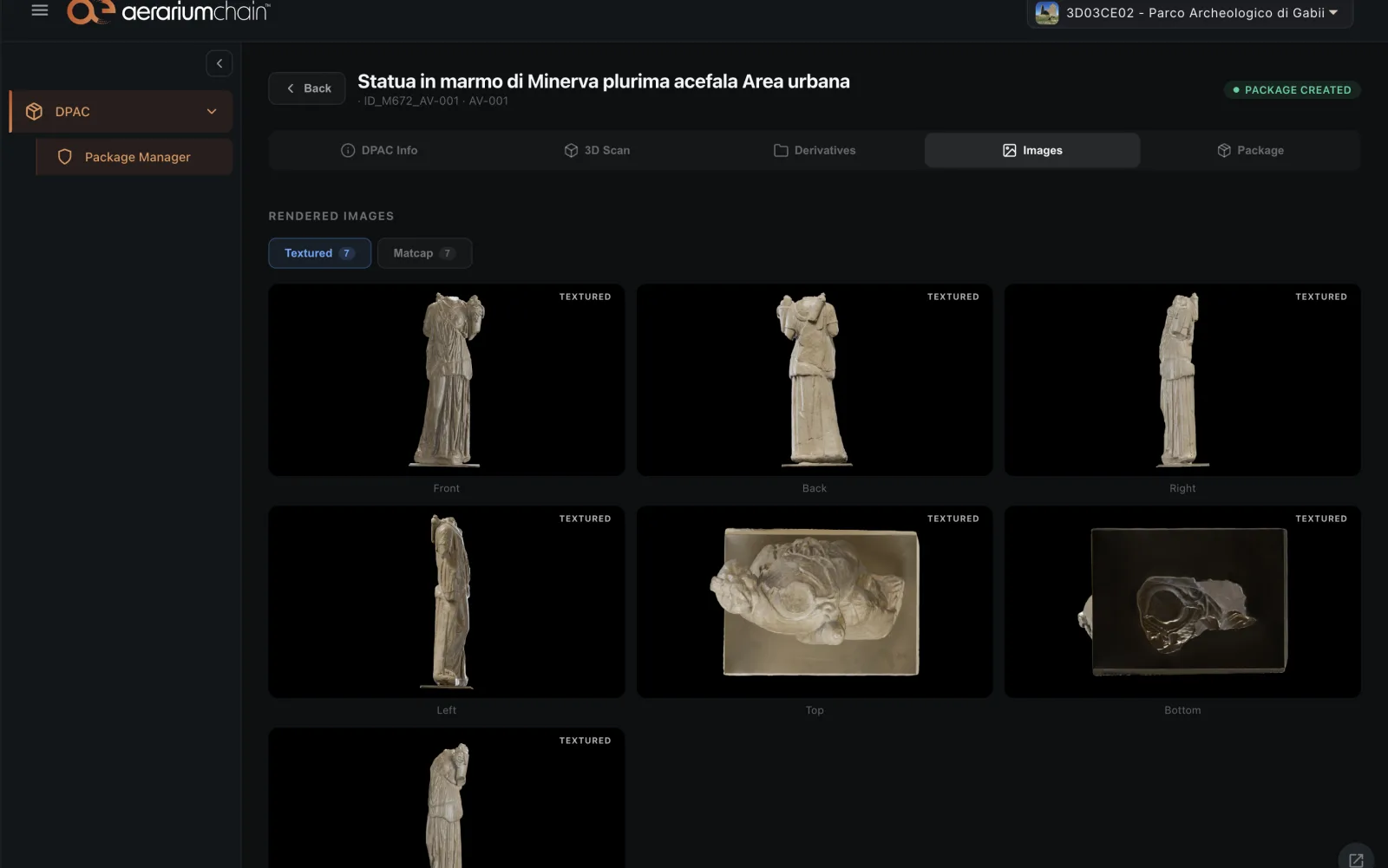
Totems, XR experiences, 8K media for catalogs, certified 3D prints. The collection in front of people.
Explore SHOW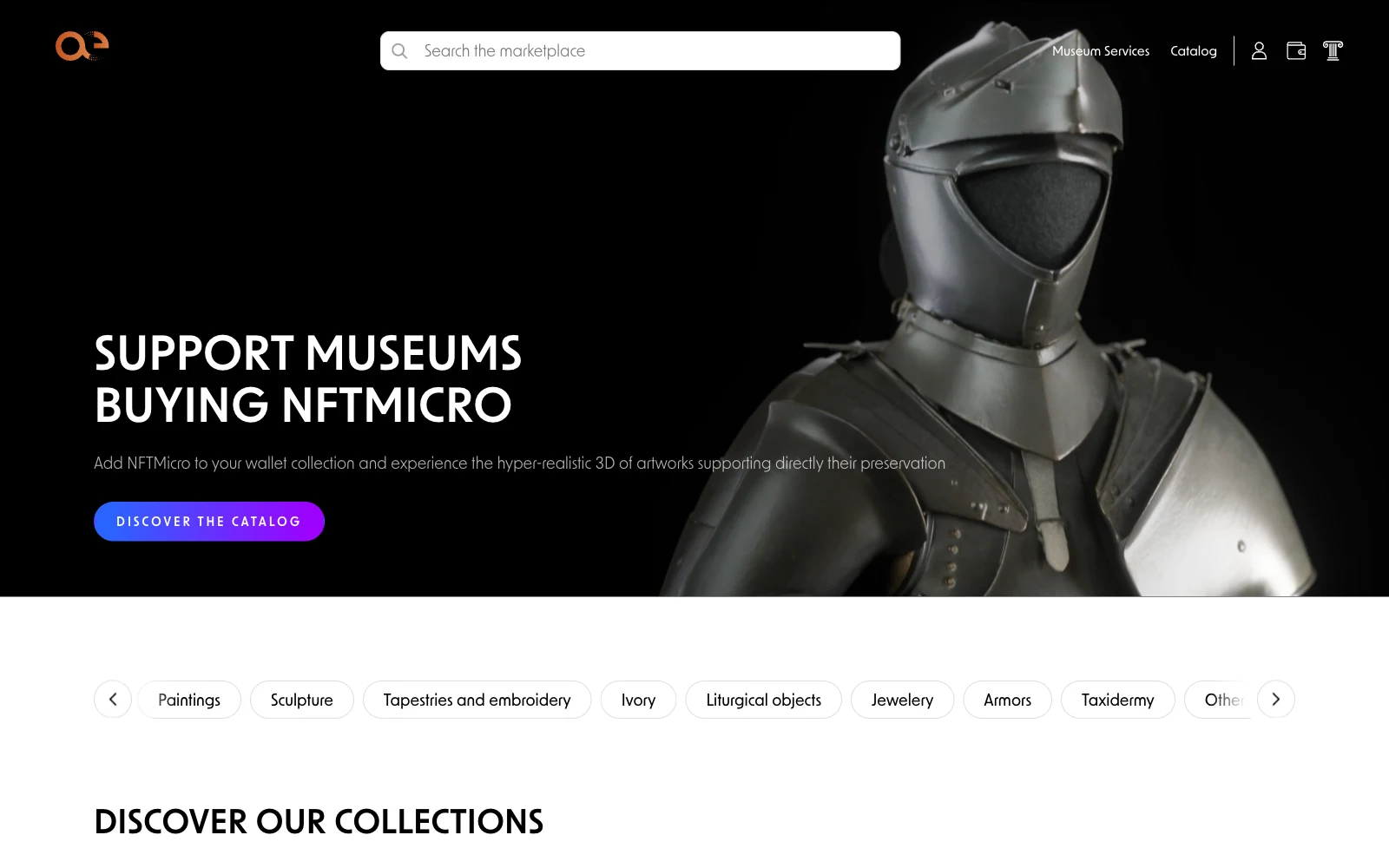
Fundraising built on the twin: campaigns, compliant digital collectibles, a way in for everyone who loves the collection.
Explore FUNDThe store
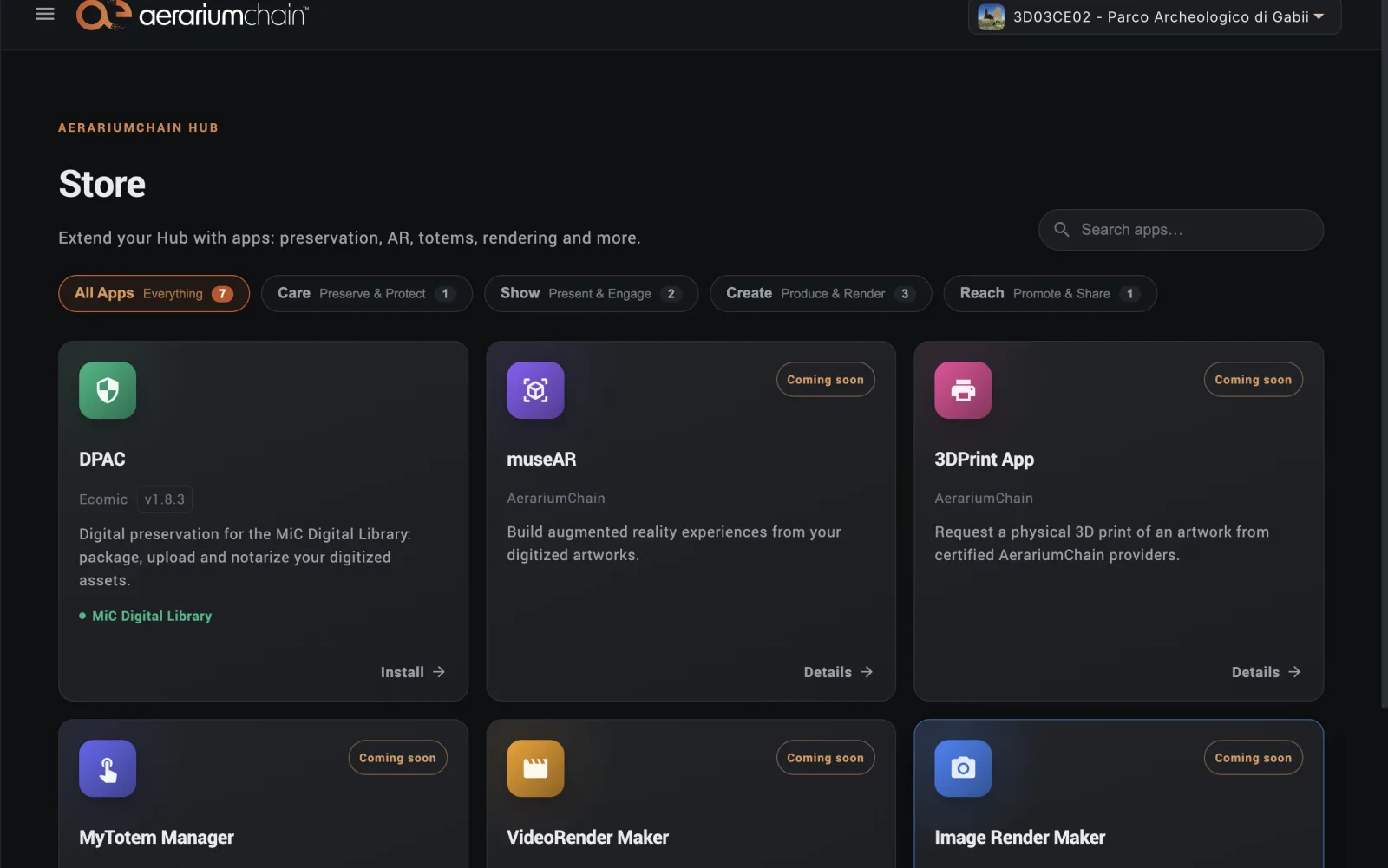
Every application installs from the HUB store already connected to your twins and your permissions: scanner tools for the field, totem interfaces, XR experiences, render makers, delivery connectors. One login for all of them. The store grows; your setup does not.
Security and data sovereignty
Private by default. Open formats. Institutional ownership. Regional or private infrastructure where required.
Full-resolution. No software. No download. Open it on your phone.