
High net worth clients rely on their auction house for more than a sale. Around each important lot there is documentation that advisors, notaries, insurers and authorities will ask for, sometimes years later. Certified digital twins give auction houses a way to produce that documentation once, with evidence that holds up.
The paperwork behind a valuable lot
When a significant work changes hands, the people around the client need documents: its identity, its condition at a given date, its provenance, the valuation and the transaction itself. Tax advisors and family offices use them for estate planning, succession, donations to institutions and the reporting of assets. Insurers use them to cover the work. Export and import procedures need a reliable description of the object. Too often all of this is assembled from catalog photographs and notes, and reconstructed again every time someone asks.
AerariumChain is not a tax advisor and does not replace one. What it provides is the evidence layer that every one of these documents depends on.
Identity and condition, with a certain date
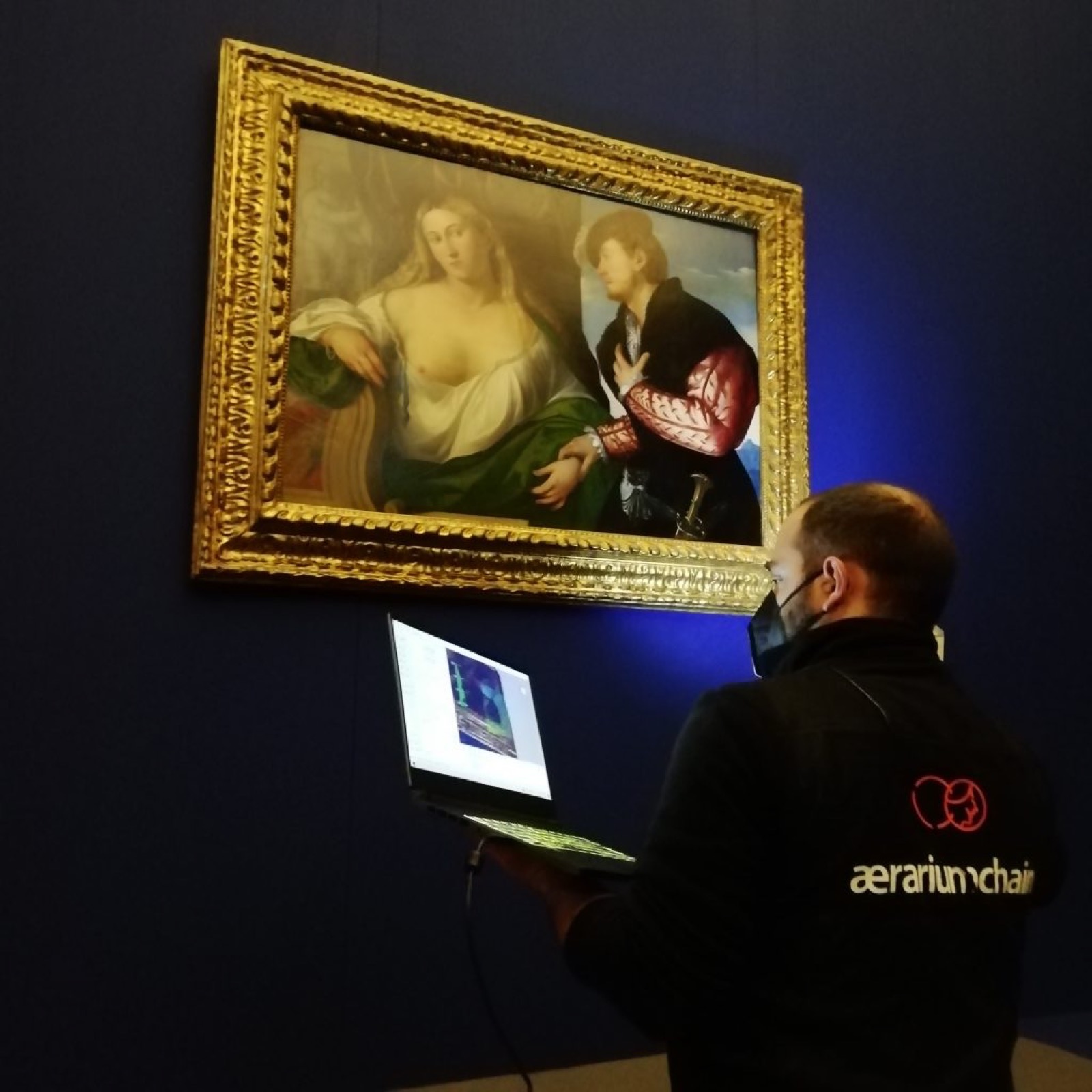
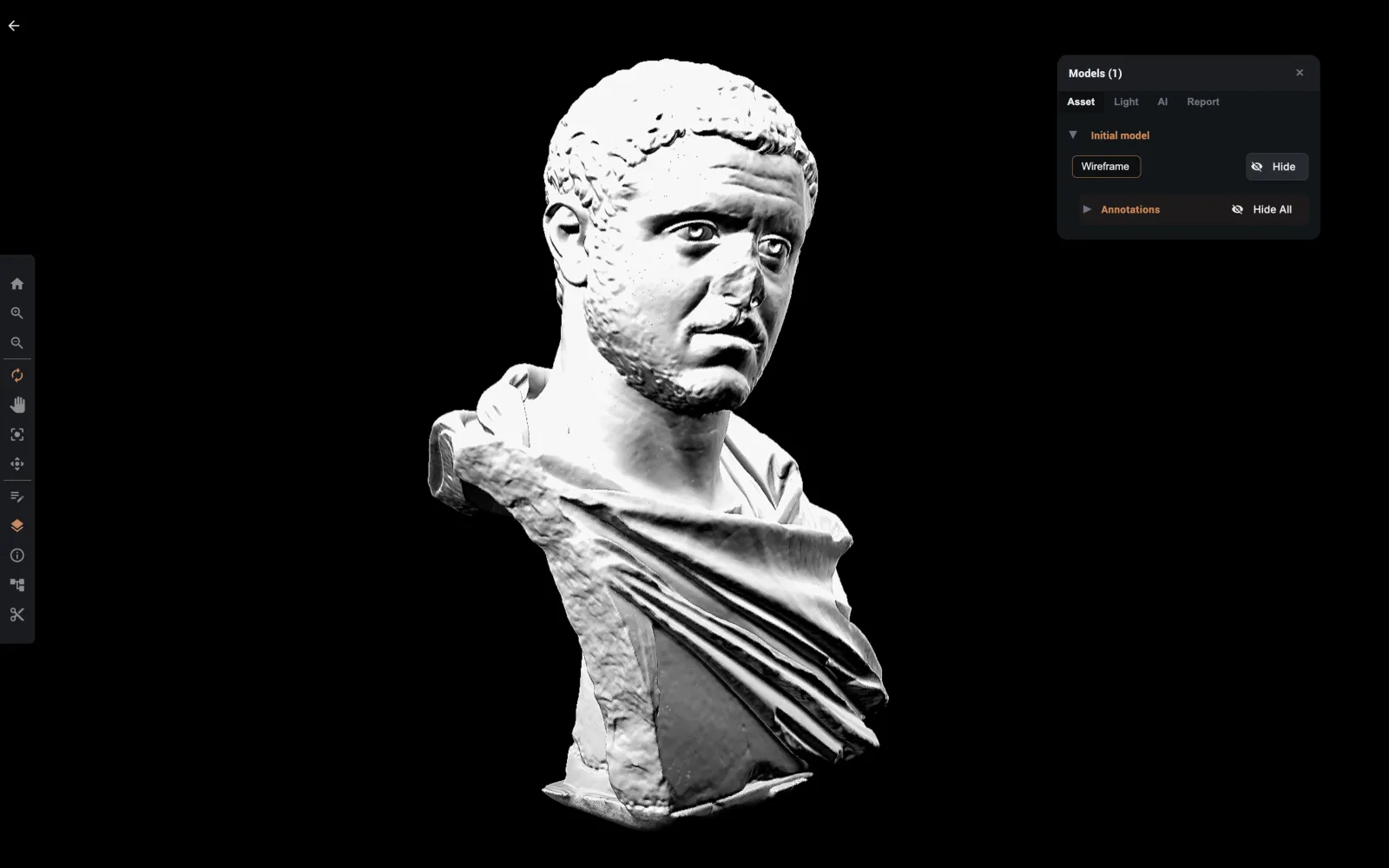
An artwork scanned with the AerariumChain kit gets a certified digital twin: 3D geometry down to 0.05 mm and 400-megapixel photography. The fingerprint of each file is written to a public blockchain at the moment of capture. That gives three things a document alone cannot:
- Identity. A measured, high resolution description of the specific object, useful to show that the work in a file is the work in the vault.
- Condition at a date. The state of the work at the time of the sale, or of a valuation, recorded with a timestamp that cannot be changed afterwards.
- Integrity. Anyone the client authorizes can verify, at any time, that the files have not been altered since capture.
See how a lot dossier looks in the HUB.
A dossier per client, private by default
In the HUB every work has its record, its versions and its full scan history, with documents attached. Access follows roles: the client, their tax advisor, their notary or their insurer see what they are allowed to see and nothing else. Nothing is public unless someone decides it should be. Data can be hosted in the client's region, and it remains the property of the owner of the work (security and data sovereignty).
What an auction house can offer its best clients
- A certified twin of the work at the moment of sale, delivered with the lot.
- A dossier the client's advisors can consult directly, instead of waiting for copies.
- Comparable condition records when the work comes back for a new sale or a valuation.
- Evidence for insurers and for loans to exhibitions, ready when needed.
For a high net worth client this is a concrete service, and for the auction house it builds a relationship that lasts beyond the hammer. The kit captures around one hundred works a day with one operator, so it fits inside the schedule of a preview or an evaluation day.
If you run client services or valuations at an auction house and want to see how a lot dossier looks in the HUB, ask for a demo.