
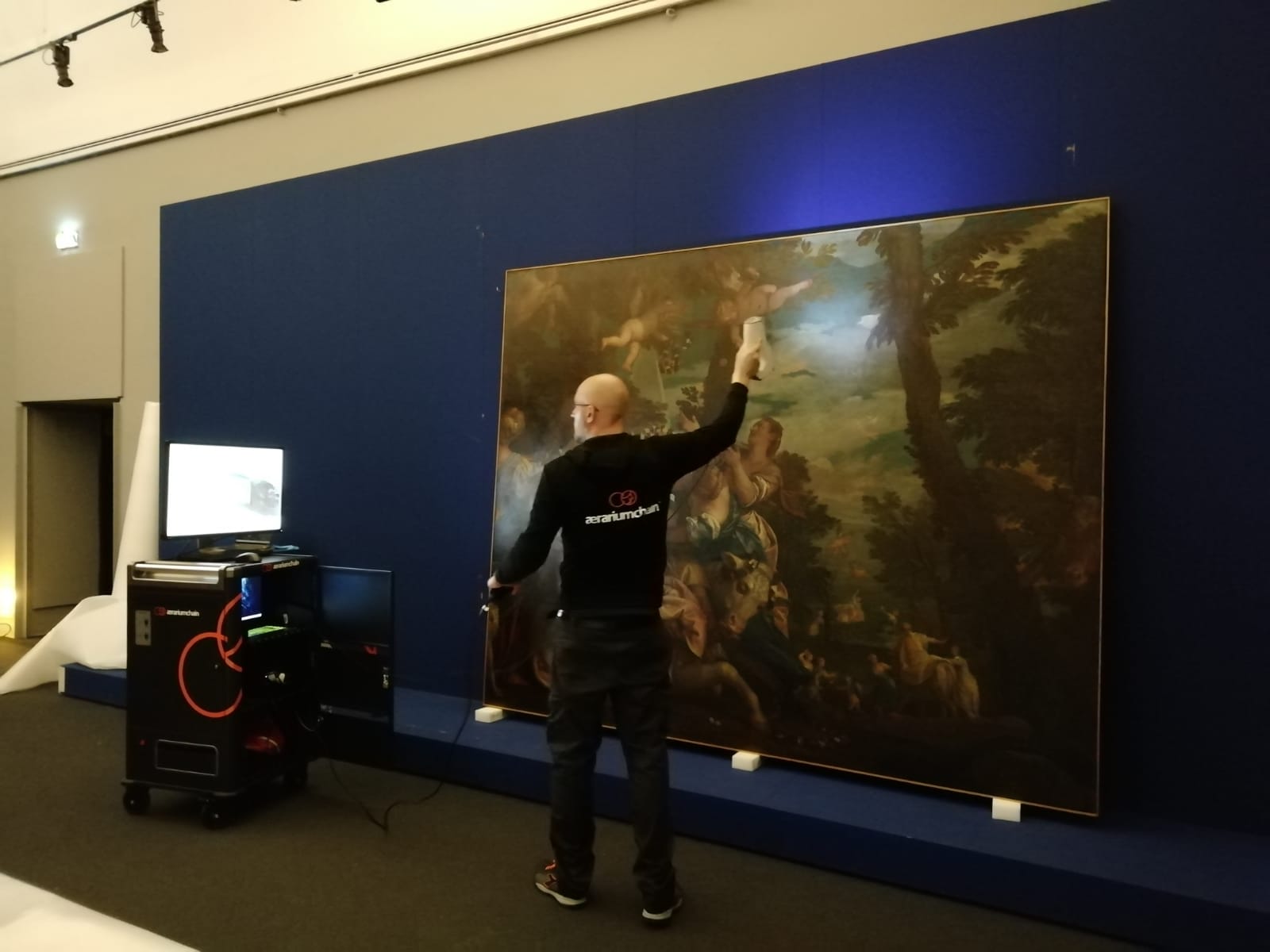
Every loan has two critical moments: the work arrives, and the work leaves. In between there are crates, couriers, climate changes and handling by many people. The condition report is what protects everyone involved. AerariumChain turns it from a hurried sheet of paper into a notarized 3D record that can be compared, millimeter by millimeter.
Why the classic condition report is fragile
At arrival, the courier, the registrar and a conservator look at the work, often under time pressure, with a lamp, a checklist and a camera. They note what they see. At departure, someone repeats the exercise, maybe a different person, with different light. If a new crack or a lifted flake of paint appears, the discussion begins: was it there before? The paper report and a few photographs rarely settle the question. We wrote more about the practice in the condition report for artworks.
Scan at arrival, scan at departure, compare
With the AerariumChain kit the work is captured in its crate area or in the gallery, in a few minutes per artwork, by one operator. The capture gives 3D geometry down to 0.05 mm and 400-megapixel photography. The flow is simple:
- T0, arrival. The work is scanned at unpacking. The twin is processed in the cloud and appears in the HUB.
- Notarization. The fingerprint of each file is written to a public blockchain at capture: the state at T0 has a certain timestamp and cannot be altered afterwards.
- T1, departure. Before packing, the work is scanned again.
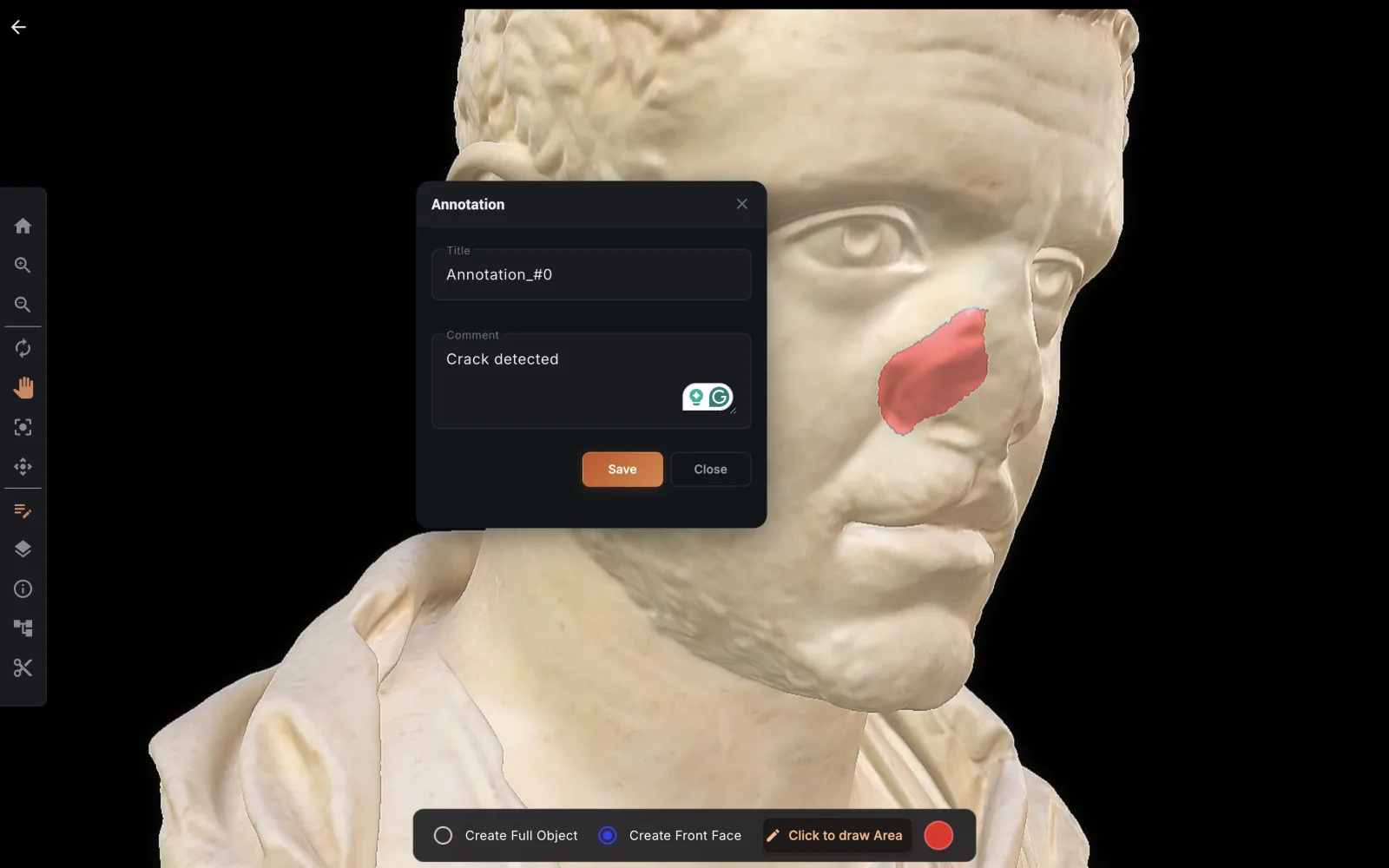
- Comparison. CARE compares the two twins at sub-millimeter level. Cracks, warping and paint loss emerge as measurable differences, not impressions.
- Report. Annotations are pinned to the geometry and the condition report is built on the twin, ready to share with the lender, the insurer and the courier.
What changes for the exhibition team
- Disputes get short. If damage occurs, the question "was it there before?" has an answer that both parties can verify.
- Lenders gain confidence. Offering a notarized 3D condition record at both ends of the loan is a strong argument when you negotiate important works.
- Insurers get evidence. A dated, measured state of the object supports claims and can support the conversation on terms.
- Remote experts can join. A conservator at the lending institution can inspect the same twin from their own office, with granular access, without traveling.
Try a scanned arrival on your next exhibition.
Touring exhibitions
For exhibitions that travel, the twin follows the work. Each venue scans at arrival and departure, and the history builds up venue after venue. At the end of the tour the lender receives the full sequence of states, all comparable with each other, instead of a stack of reports written by different hands.
Where it fits in the registrar's work
None of this replaces the registrar's judgment or the facility report. It gives that judgment better material. If you coordinate loans or touring shows and want to try a scanned arrival on your next exhibition, ask for a demo. For the wider role, read working in art: the registrar.