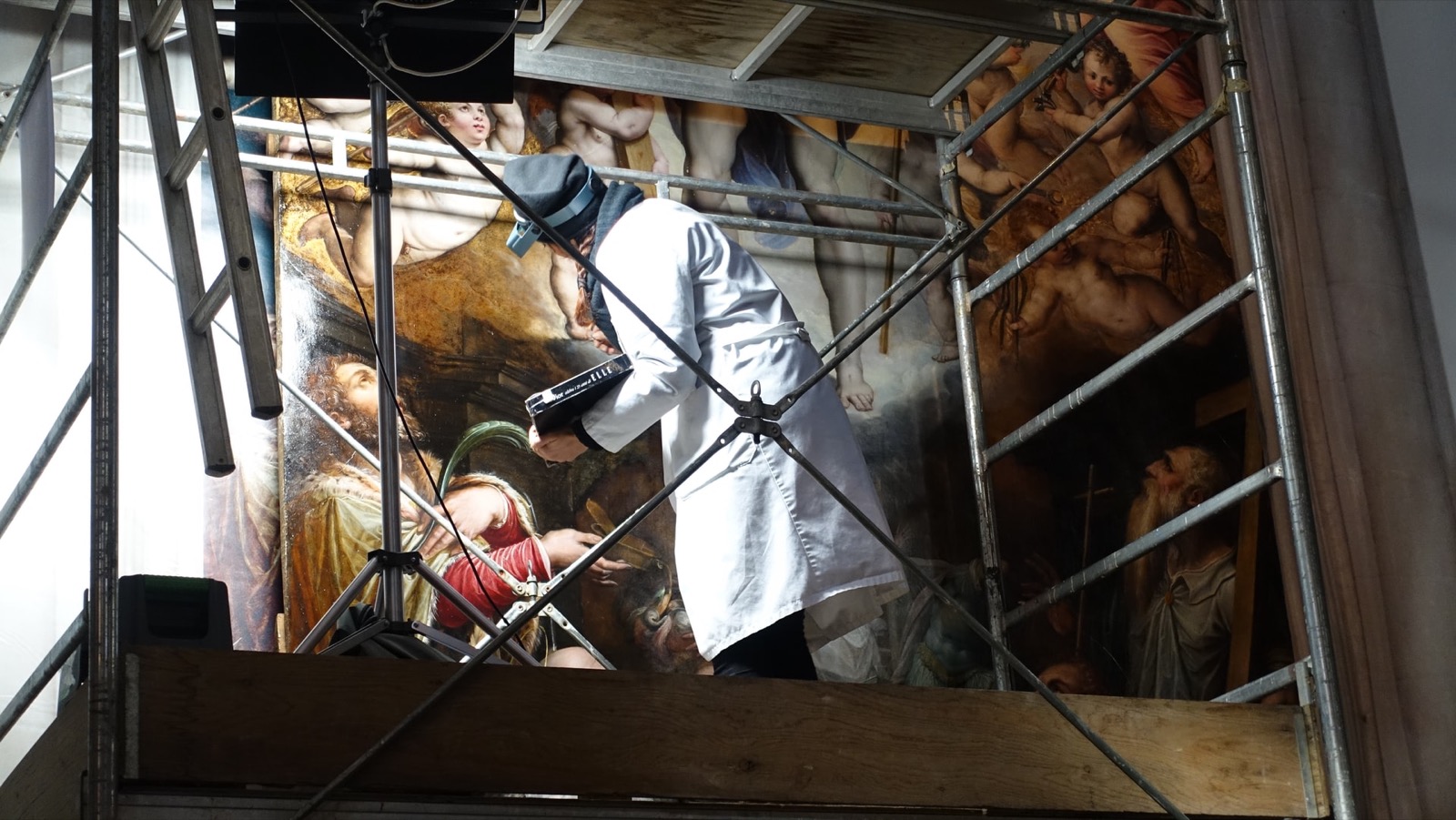
The condition report is a document of extreme importance that records the conservation status of an artwork. But how and when is it completed? Is there a standard? How much time needs to be spent to write it correctly?
Several years ago, I worked for one of the most important museums in Milan.
One day, during the preparation of an exhibition that would take place a few days later, I noticed a document, still hot off the press, that was being completed with drawings and notes.
And so, as a newly graduate in museum studies, I recalled my history of art professor’s words: “After having observed an artwork on site, we proceed with writing the specific technical data-sheet, complete with specialised photographic or drawing documentation.” The condition report.
What is the Condition Report
The condition report is a document of extreme importance that records the conservation status of an artwork. It is generally used by all the professional figures that find themselves interacting with it, at any time when a treatment becomes necessary, e.g. handling display or reparation of damages. It is used to describe the conservation status of the artwork right before the packaging and transportation, so to define quickly, in the event of damages, their extent and the respective responsibilities. Furthermore, it needs to be written before departure, upon arrival in the new site and at the end of the exhibition and, in any case, before embarking on the return journey to the original location and when it arrives back.
In brief, the condition report records the status quo of the artwork.
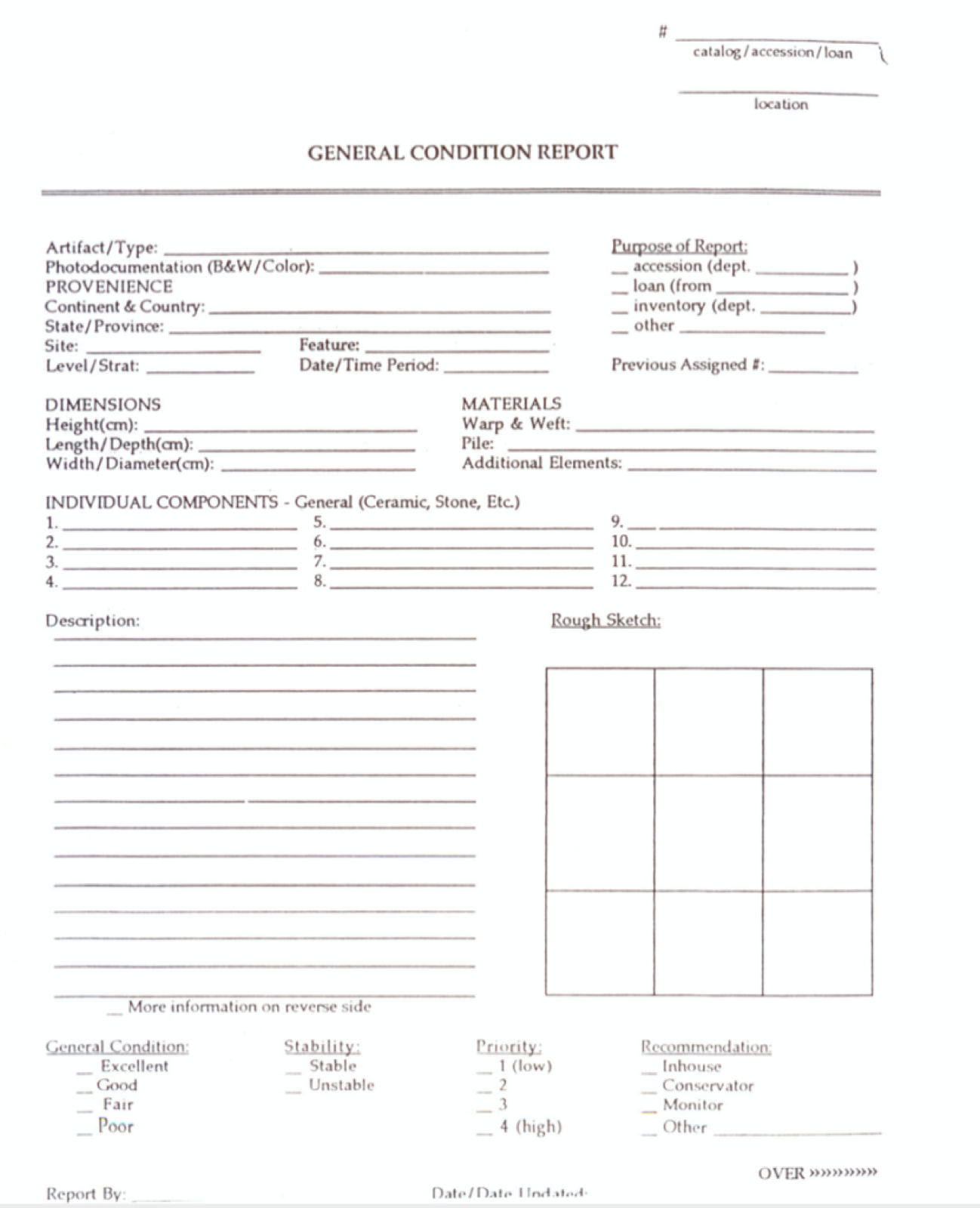
When it is required
The occasions when the CR, – so it is called by the specialists in the sector – it’s required are various: from the sale to the purchase of an artwork, from the monitoring of the collection to the handling, restoration and temporary loan for exhibitions or a simple transfer from one place to another.
For example, during the sale of the artwork, the CR becomes the certification par excellence for the buyer, allowing to reconstruct origins, restorations, exhibitions and reducing the risks of running into fakes. As we were saying, it is best to write the CR to keep the artwork monitored: in this specific case it’s advisable to always keep it updated because it is an act of love towards art and one’s one investments!
Turn your next condition report into a notarized 3D record.
The sore point
During my day in the museum hall, I observe that, as I had imagined, on the document there is a photograph of the artwork on the right and some areas to be filled in. Above the photograph, some spots are marked with X written in pen and in the different areas, the entries that refer to the visible issues of the artwork itself. Nevertheless, it seemed to me as if it was being filled in with a certain rush. Was maybe more time needed? Where maybe the artworks displayed too many?
New possible paths?
Without bringing into question the validity of all the CR done by professionals of the sector in the last few years, I think there is always a possibility to tread a new path, turning this document into an official deed of the state-of-the-art of the artwork itself.
The condition Report branded AerariumChain would like to be the result of a cloud tool in support of the digitalisation of the conservation status and the restoration and maintenance processes of the cultural heritage.
How AEC and the CR work
The 3d scanning technologies, blockchain and AI in this case would have a crucial role:
- Through the scan, we obtain a 3D model of the artwork, where everything visible is in the spotlight, allowing to recognise unequivocally the artwork and avoid running into thefts.
- Blockchain: certifies the information that we have and act as a guarantee for the buyer or the lender of the artwork. It also tracks the information history, which should be updated as time goes by.
- L’Artificial Intelligence, lastly, limits the subjective sphere and human variables such as fatigue, negligence and editing speed. Furthermore, it monitors the status of the art over time. It helps to prevent damages and highlight differences that may not be very visible to the naked eye for scans done at different times.
A whole different debut
In other words, with AerariumChain, we plan the production of a Condition Report that, in the different occasions is required, would allow to have available a quick monitoring wherever one may be, thanks to the use of one single tool, SweetHive, reducing to a minimum the margins of error for who has to interact with it.