
Banks hold some of the most important art collections in Europe: corporate collections built over decades, works held for private banking clients, art accepted in guarantee. Managing them means answering to auditors, supervisors, shareholders and clients. AerariumChain gives banks a way to manage art with the same discipline they apply to any other asset.
Art is an asset that is hard to audit
A bond has an ISIN and a custody record. A painting has an inventory card, a few photographs and a location. When an auditor or an internal control function asks "does this work exist, where is it, in what condition, and who has touched its file", the answer often takes weeks and depends on a few people who know the collection. That is uncomfortable for any bank, and more so when the collection is large, spread across offices or partly on loan.
Every work, verifiable
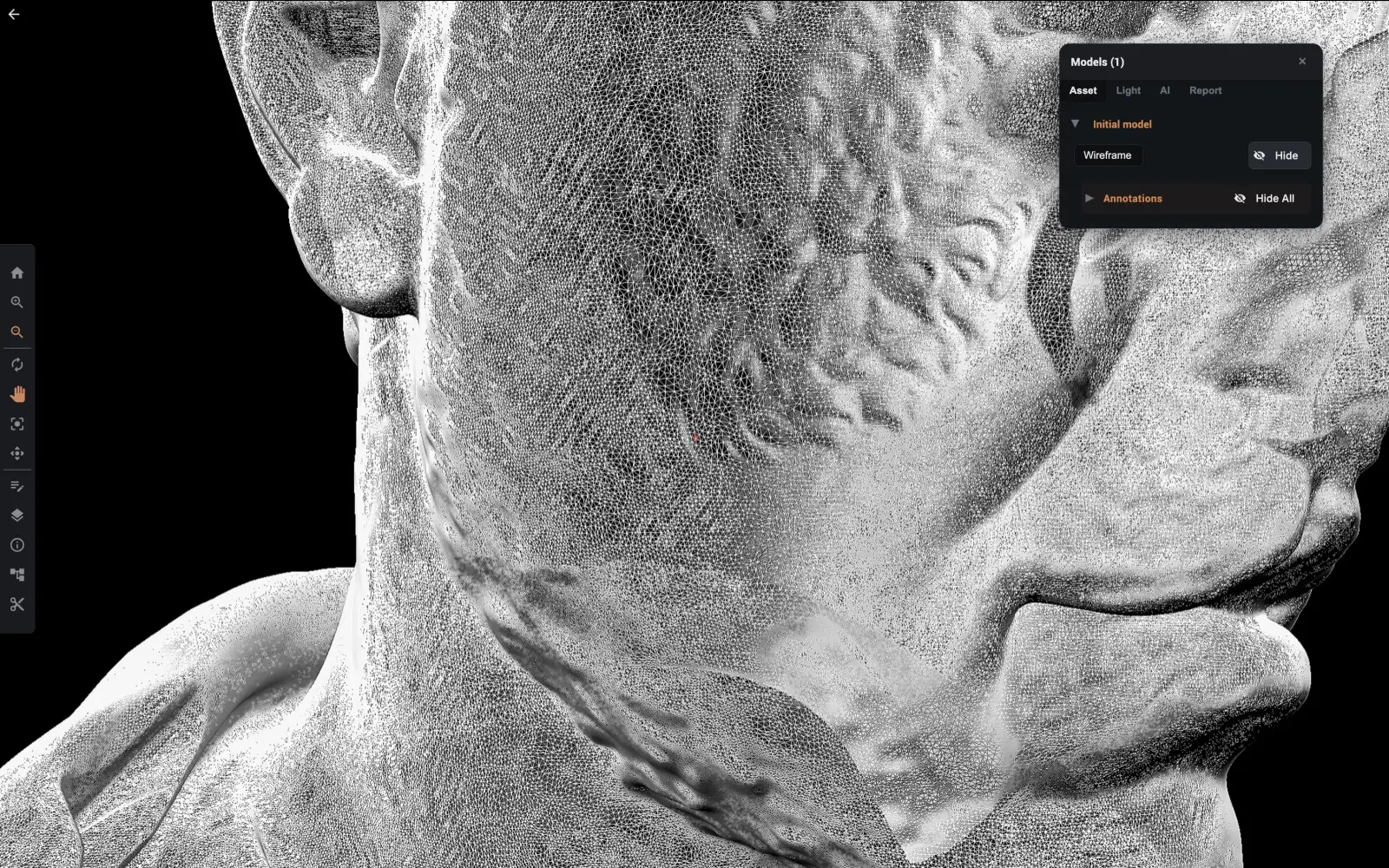
With the AerariumChain kit each work becomes a certified digital twin: 3D geometry down to 0.05 mm, 400-megapixel photography, and the fingerprint of every file notarized on a public blockchain at capture. In the HUB each work carries its record, its versions, its full scan history and its approvals. The result is a registry where:
- Existence and identity are documented by a measured twin, not only by a description.
- Condition is recorded at given dates and can be compared over time with CARE, at sub-millimeter level.
- Integrity is provable: anyone authorized can verify that a file has not been altered since it was captured.
- Every step (capture, review, approval) is tracked with its date and its author.
High-resolution twins, on every company device
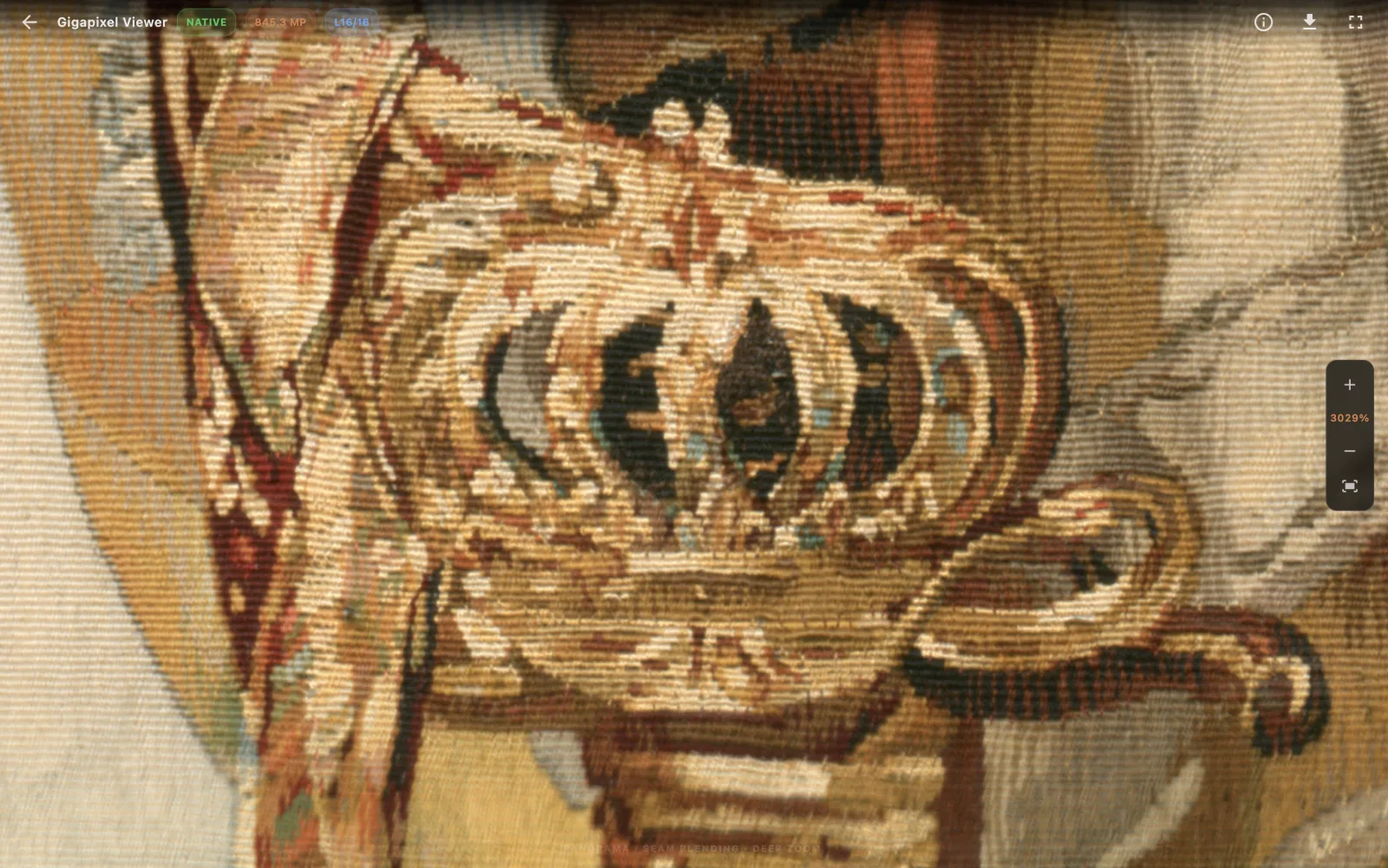
A high-resolution twin is worth far more than a photograph. 3D geometry down to 0.05 mm, 400-megapixel photography and gigapixel surfaces that zoom down to the single brushstroke make it a reference the bank can measure, compare and show without ever moving the work. It is the same level of detail an appraiser, a conservator or an insurer would ask to see.
A large collection quickly reaches several terabytes. In the HUB that data is processed directly in the system, in the cloud or on the bank's own hardware, and never has to be copied to a workstation. Progressive streaming sends only what the screen needs, so a master of several gigabytes travels as a few dozen megabytes: it opens in a browser tab on a company laptop, a tablet or a phone, at full resolution and with nothing to install. Access still follows roles, so each person sees only the works they are allowed to see.
Built for regulated environments
The HUB runs on AerariumChain, an infrastructure built on TrustTwin OS for regulated, high-trust environments. Access follows roles, so the art team, the control functions, external appraisers and insurers each see only their part. Everything is private by default. Data is encrypted in transit and at rest and hosted in the region the bank chooses; when required, storage and processing can stay on the bank's own hardware, inside its perimeter. Export in open formats is always available, so there is no lock-in (security and data sovereignty).
An internal, continuous acquisition process
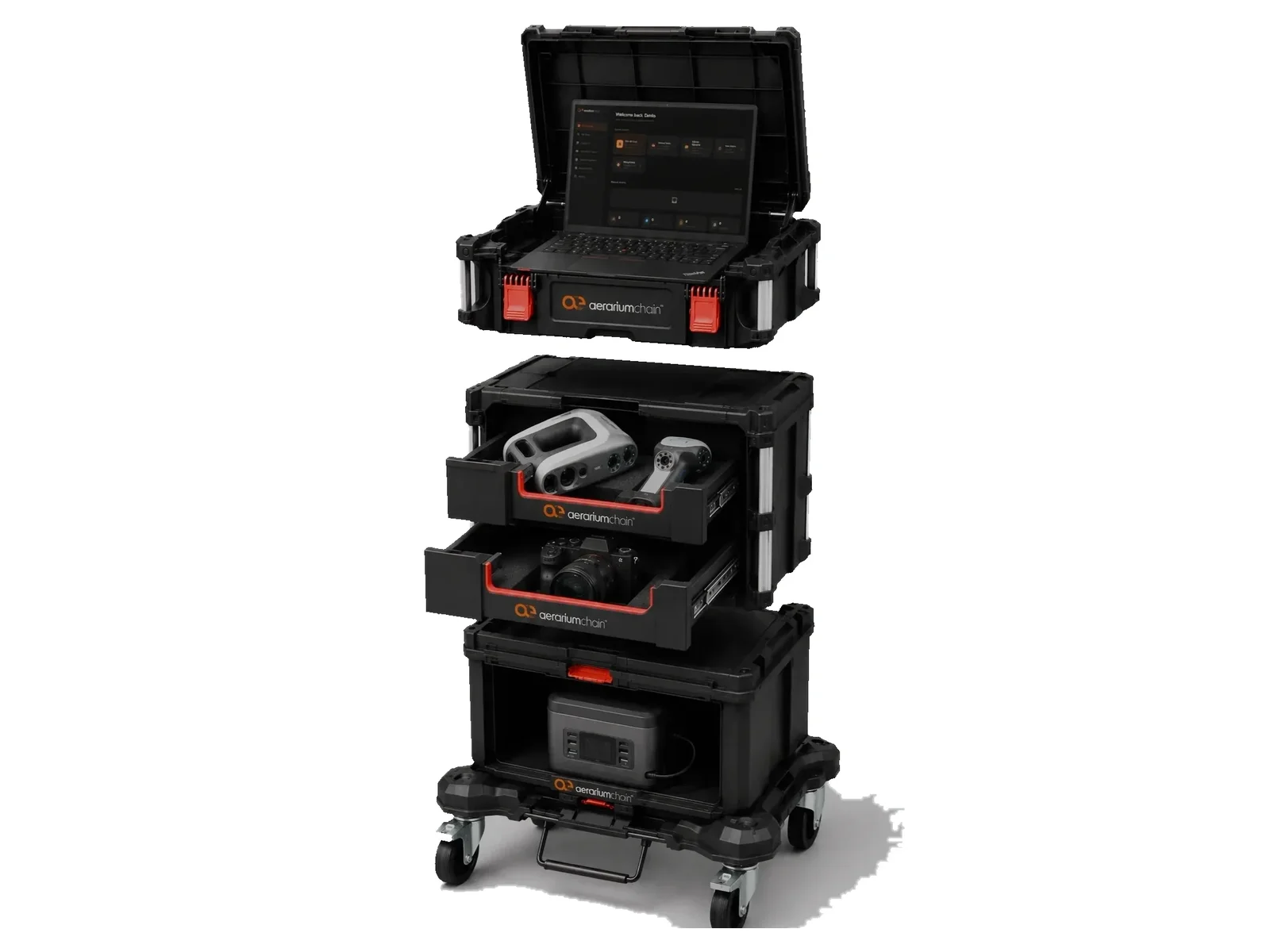
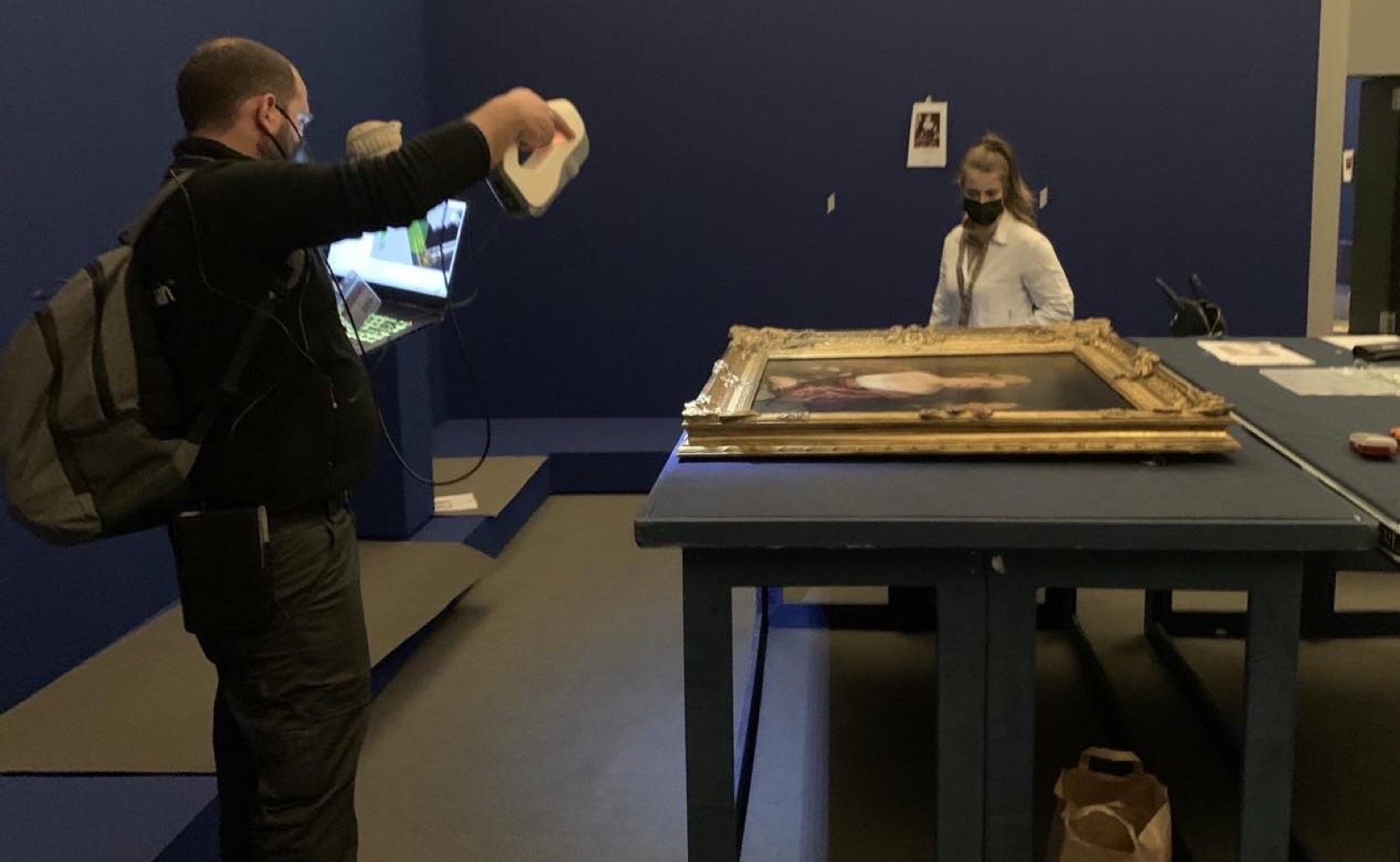
The kit is portable: it travels in an ordinary car and moves through offices, vaults and galleries without touching the works. One trained operator is enough. This lets a bank keep acquisition inside its own perimeter and turn digitization from a one-off project into a continuous process:
- At entry. Every new work, whether acquired, received in guarantee or deposited by a private banking client, is scanned when it arrives.
- Over time. Works are scanned again at set intervals, and before and after a loan, a move or a restoration, then compared with their previous state.
- At exit. Works that are sold, returned or leave the bank are scanned one last time, closing their record.
The workflow is fully customizable: steps, roles, approvals and checks follow the bank's own procedures. Every capture follows the same steps (review, approval, notarization) and is recorded with its date and its author. The whole process can therefore be documented and audited end to end, according to the bank's internal policies and controls.
See a registry built on certified twins.
Three uses inside a bank
- The corporate collection. A complete, verifiable registry for the works the bank owns, with condition monitoring and ready evidence for loans to exhibitions and insurance.
- Private banking. Clients who hold important works receive a certified dossier on their assets, consultable by their advisors with controlled access.
- Art in guarantee. When art supports a loan, the bank can document the identity and condition of the collateral at the start and check it again over time.
Transparency as a value, not only a duty
Bank collections are also a cultural responsibility. The same twins that serve compliance can serve the public: an online collection with 3D and gigapixel viewing, interactive totems in the bank's galleries, high quality images for catalogs (SHOW).
If you are responsible for a bank's art collection, its art advisory or its controls, ask for a demo: we will show you a registry built on certified twins and how access, evidence and export work in practice.